

The honest answer depends on why you lost them. Lashes that shed naturally as part of the normal growth cycle typically return within 6 to 8 weeks. Lashes pulled out from the root, burned, or affected by a health condition can take anywhere from 3 to 9 months to fully recover. And in rare cases where the hair follicle is permanently damaged, regrowth may not happen at all.
This guide covers the full picture: the eyelash growth cycle, how different types of damage affect the timeline, what conditions can delay regrowth, and the evidence-backed steps you can take to support your lashes as they come back.
The Eyelash Growth Cycle Explained
To understand why regrowth takes as long as it does, it helps to know how the eyelash growth cycle actually works. Unlike the hair on your head, eyelashes follow a much shorter cycle with three distinct phases:
Anagen (Active Growth Phase)
This is the phase where the lash is actively growing from the follicle. For eyelashes, the anagen phase lasts approximately 30 to 45 days. Only about 40% of upper lashes and 15% of lower lashes are in this phase at any given time, which is why eyelashes stay short compared to scalp hair.
Catagen (Transition Phase)
The lash stops growing and the follicle begins to shrink. This phase lasts roughly 2 to 3 weeks. If a lash is pulled out during catagen, the follicle needs to complete this phase before a new lash can begin growing.
Telogen (Resting Phase)
The lash remains in place but is no longer attached to an active follicle. This phase lasts up to 100 days before the lash naturally sheds and a new anagen phase begins. This is why some lashes seem to just fall out on their own.
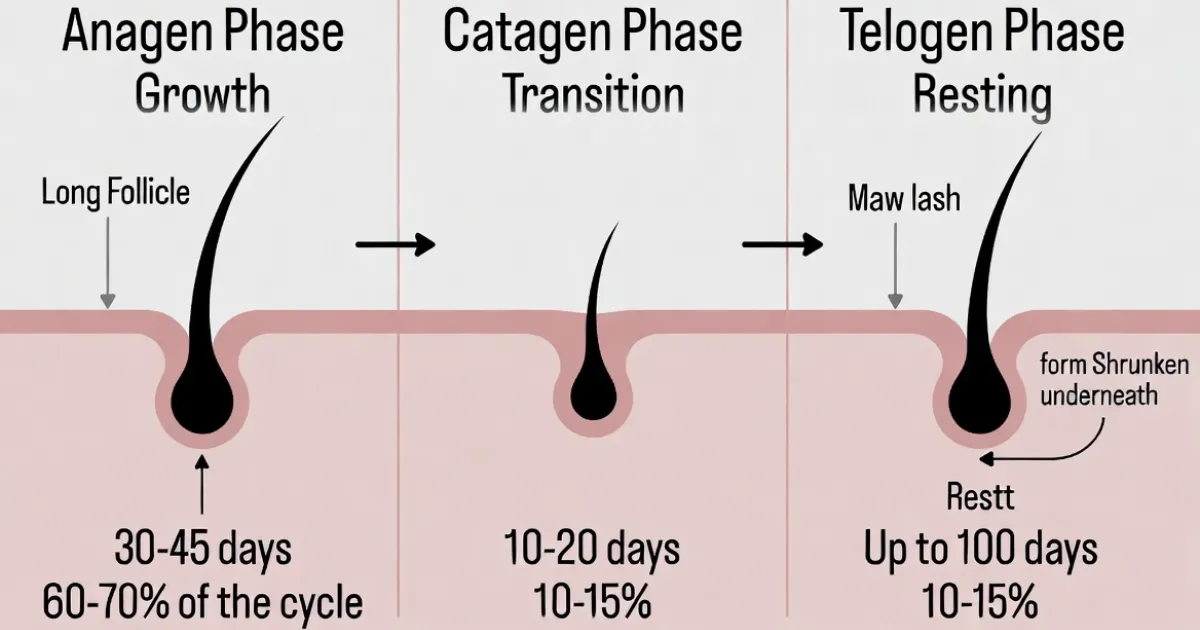
Understanding this cycle matters because where the follicle is in its cycle when damage occurs directly affects how long regrowth will take. A lash lost during anagen will take longer to come back than one that sheds naturally at the end of telogen.
How Long Does Lash Regrowth Actually Take?
The timeline varies significantly depending on the cause of lash loss. Here is a practical breakdown:
| Cause of Lash Loss | Expected Regrowth Timeline |
|---|---|
| Natural shedding | 6 to 8 weeks |
| Cutting or trimming | 6 to 12 weeks |
| Pulled out from root | 3 to 9 months |
| Burned or heat damage | 3 to 9 months |
| Extension-related damage | 6 to 12 weeks (if follicle intact) |
| Alopecia or medical condition | Variable, may require treatment |
| Chemotherapy | Typically regrows 1 to 3 months after treatment ends |
1. Natural Shedding
If a lash falls out as part of its normal cycle, regrowth is relatively quick. The follicle is healthy, the new anagen phase begins almost immediately, and you can expect the lash to return within 6 to 8 weeks. You may not even notice individual lashes shedding because not all lashes are in the same phase at the same time.
2. Cutting or Trimming
A trimmed lash has not lost its follicle connection. The lash itself grows back from its current length and the full regrowth timeline runs 6 to 12 weeks depending on how short it was cut.
3. Pulled Out from the Root
This is where timelines extend significantly. When a lash is forcibly removed from the root, the follicle is disrupted mid-cycle. The follicle needs to complete its current phase, rest, and then restart the growth cycle from scratch. This process can take 3 to 9 months for full regrowth.
Repeated forcible removal from the same follicle over time can lead to permanent thinning, which is why habits like trichotillomania (compulsive hair pulling) can cause lasting changes to lash density.
4. Lash Extension Damage
Lash extensions themselves do not typically damage follicles when applied and removed correctly. However, poor application, overly heavy extensions, or forcible removal can stress or pull out the natural lash beneath. In these cases, regrowth follows the same 3 to 9 month timeline as forced removal.
If the follicle is intact and the lash was simply shed or loosened during the extension cycle, expect regrowth within 6 to 12 weeks. For a more detailed look at safe extension removal, see our guide on [how to remove lash extensions at home].
Health Conditions That Affect Lash Regrowth
Sometimes slow or absent regrowth has nothing to do with physical damage and everything to do with what is happening inside the body. Several health conditions can interrupt the lash growth cycle:
Alopecia Areata
An autoimmune condition where the immune system attacks hair follicles. It can affect eyelashes as well as scalp hair and eyebrows. Regrowth is possible but unpredictable, and treatment typically involves a dermatologist. The American Academy of Dermatology has detailed information on alopecia management options.
Trichotillomania
A body-focused repetitive behavior involving compulsive pulling of hair, including eyelashes. Repeated pulling from the same follicles over time can lead to follicle scarring and reduced regrowth. If you think this may apply to you, the TLC Foundation for Body-Focused Repetitive Behaviors offers resources and professional referrals.
Chemotherapy and Medical Treatments
Chemotherapy targets rapidly dividing cells, which includes hair follicle cells. Lash loss is common during treatment. The good news is that lashes typically begin regrowing 1 to 3 months after treatment ends, once the follicles resume normal activity.
Thyroid Disorders
Both hypothyroidism and hyperthyroidism can cause diffuse hair loss including eyelashes. Addressing the underlying thyroid condition usually allows regrowth to resume. If you notice lash thinning alongside fatigue, weight changes, or temperature sensitivity, a thyroid panel from your doctor is worth considering.
Nutritional Deficiencies
Low levels of biotin, iron, zinc, or vitamin D have been linked to hair loss across the body, including lashes. This is one of the more addressable causes and is covered in detail in the regrowth support section below.

How to Support Faster Lash Regrowth
You cannot force follicles to skip phases of the growth cycle, but you can create the best possible conditions for healthy, consistent regrowth.
1.) Be Gentle with Your Eye Area
This is the single most impactful thing you can do. Habits that stress or disrupt lashes include:
- Rubbing your eyes aggressively
- Using harsh oil-based or alcohol-based makeup removers
- Wearing overly heavy lash extensions on fine or sparse natural lashes
- Sleeping face-down on rough pillowcases
Switch to a gentle micellar water or oil-free cleanser for eye makeup removal. If you wear extensions, work with a lash artist who matches extension weight to your natural lash health.
2.) Eat for Follicle Health
Hair follicles are metabolically active and respond to nutrition. Key nutrients that support lash regrowth:
- Biotin (Vitamin B7): Found in eggs, almonds, and sweet potatoes. Supports keratin production, the protein that makes up lash fibers.
- Iron: Deficiency is one of the most common causes of hair loss. Good sources include lean red meat, lentils, and spinach.
- Zinc: Supports follicle repair and regeneration. Found in pumpkin seeds, chickpeas, and beef.
- Vitamin D: Low levels are associated with hair loss across the body. Sunlight exposure and fatty fish are natural sources.
- Omega-3 fatty acids: Support scalp and follicle health. Found in salmon, walnuts, and flaxseed.
If your diet is limited or you suspect a deficiency, a blood panel from your doctor can identify gaps before you supplement.
3.) Use a Lash Serum
Over-the-counter lash serums are the most targeted tool for supporting regrowth. Look for formulas containing:
- Peptides: Signal follicles to extend the active growth phase
- Biotin: Conditions the lash fiber itself
- Panthenol (Vitamin B5): Strengthens and adds flexibility to lashes
- Hyaluronic acid: Hydrates the lash line
Well-reviewed options include Vegamour GRO Lash Serum, which uses plant-based actives, and the RevitaLash Advanced Eyelash Conditioner, which has clinical study support behind it. Apply along the upper lash line each evening with the included brush or a clean spoolie.
Note: Prescription-strength lash serums containing bimatoprost (like Latisse) are available from dermatologists and ophthalmologists for cases of significant lash loss. These are more powerful than OTC options but require a prescription and carry potential side effects including eye color change with prolonged use.
4.) Castor Oil as a Conditioning Option
Castor oil is one of the most widely used home remedies for lash growth support. While clinical evidence for its growth-stimulating properties is limited, it does coat and condition the lash fiber, reducing breakage and creating the appearance of fuller lashes during the regrowth period. Apply a small amount along the lash line with a clean spoolie before bed and rinse in the morning.
When to See a Doctor About Lash Loss
Most lash loss is temporary and resolves on its own. But certain patterns warrant a medical conversation:
- Sudden, rapid lash loss without an obvious cause
- Lashes have not returned after 3 to 4 months following natural or extension-related loss
- Loss accompanied by eyebrow thinning, scalp hair loss, or skin changes
- Eye irritation, redness, or swelling around the lash line
- Loss during or after a period of significant physical or emotional stress
A dermatologist or your primary care physician can run bloodwork to identify nutritional deficiencies, thyroid issues, or autoimmune markers that might be contributing to the problem.
Frequently Asked Questions
Q: Do lashes grow back after lash extensions?
Yes, in most cases. Lash extensions applied and removed correctly do not damage the follicle. If your natural lashes were pulled out or damaged during the extension process, expect regrowth within 3 to 9 months. If they simply shed as part of the normal cycle, regrowth takes 6 to 12 weeks.
Q: Do eyelashes grow back if pulled out from the root?
Yes, as long as the follicle is not permanently scarred. A single instance of pulling out a lash will typically result in regrowth within 3 to 9 months. Repeated pulling from the same follicle over time can cause lasting damage.
Q: Can I speed up eyelash regrowth?
You cannot accelerate the biological phases of the growth cycle, but you can support optimal conditions for regrowth by avoiding eye rubbing, eating a nutrient-rich diet, and applying a quality lash serum with peptides and biotin.
Q: Do lashes grow back after chemotherapy?
Yes. Lash loss from chemotherapy is usually temporary. Most people see lash regrowth begin within 1 to 3 months after their treatment cycle ends, though texture and density may be slightly different initially.
Q: How many lashes do we lose per day naturally?
It is normal to shed 1 to 5 eyelashes per day as part of the natural telogen cycle. If you are consistently losing more than this, or noticing visible thinning over time, it may be worth investigating further.
Final Thoughts: How Long Does It Take for Lashes to Grow Back?
The answer to how long it takes for lashes to grow back ranges from 6 weeks to 9 months depending on the cause and severity of the loss. Healthy follicles recover well. The key is giving them the right conditions to do so.
To recap:
- Natural shedding: 6 to 8 weeks
- Cutting or trimming: 6 to 12 weeks
- Pulled from root or burned: 3 to 9 months
- Health condition related: variable, may require treatment
- Post-chemotherapy: 1 to 3 months after treatment ends
Be gentle with your eye area, support your follicles through nutrition and a quality lash serum, and resist the urge to rub, pick, or over-treat the area while regrowth is underway. If lashes are not returning after several months with no obvious cause, a visit to your doctor is the right next step.
